Shopping Research in ChatGPT: The Next Step in Product Discovery
Shopping Research in ChatGPT: The Next Step in Product Discovery

August 24, 2026
Updated:
August 19, 2026
Featured & Recent Articles













December 9, 2025
Updated:
August 19, 2026
Shopping Research in ChatGPT: The Next Step in Product Discovery
AI-driven shopping continues to evolve quickly, and ChatGPT’s newest update marks another major shift in how people discover products online. Previously, ChatGPT introduced Instant Checkout, allowing users to complete purchases directly within the platform. Now, OpenAI has expanded that foundation with Shopping Research, a new feature that transforms the research phase of the buying journey. This advancement reshapes how users compare products, evaluate options, and make decisions, and it introduces new considerations for brands building an effective SEO strategy in an AI-powered search world.
A More Intelligent Approach to Product Research
Shopping research is designed for the part of the buying journey that usually takes the most time: deciding what to buy. Instead of scanning multiple tabs, reading lengthy comparison guides, or searching through retailers manually, users can now describe what they need—“I need a quiet vacuum,” “Help me compare these three bikes,” “Find a gift for a four-year-old”—and ChatGPT does the research for them.
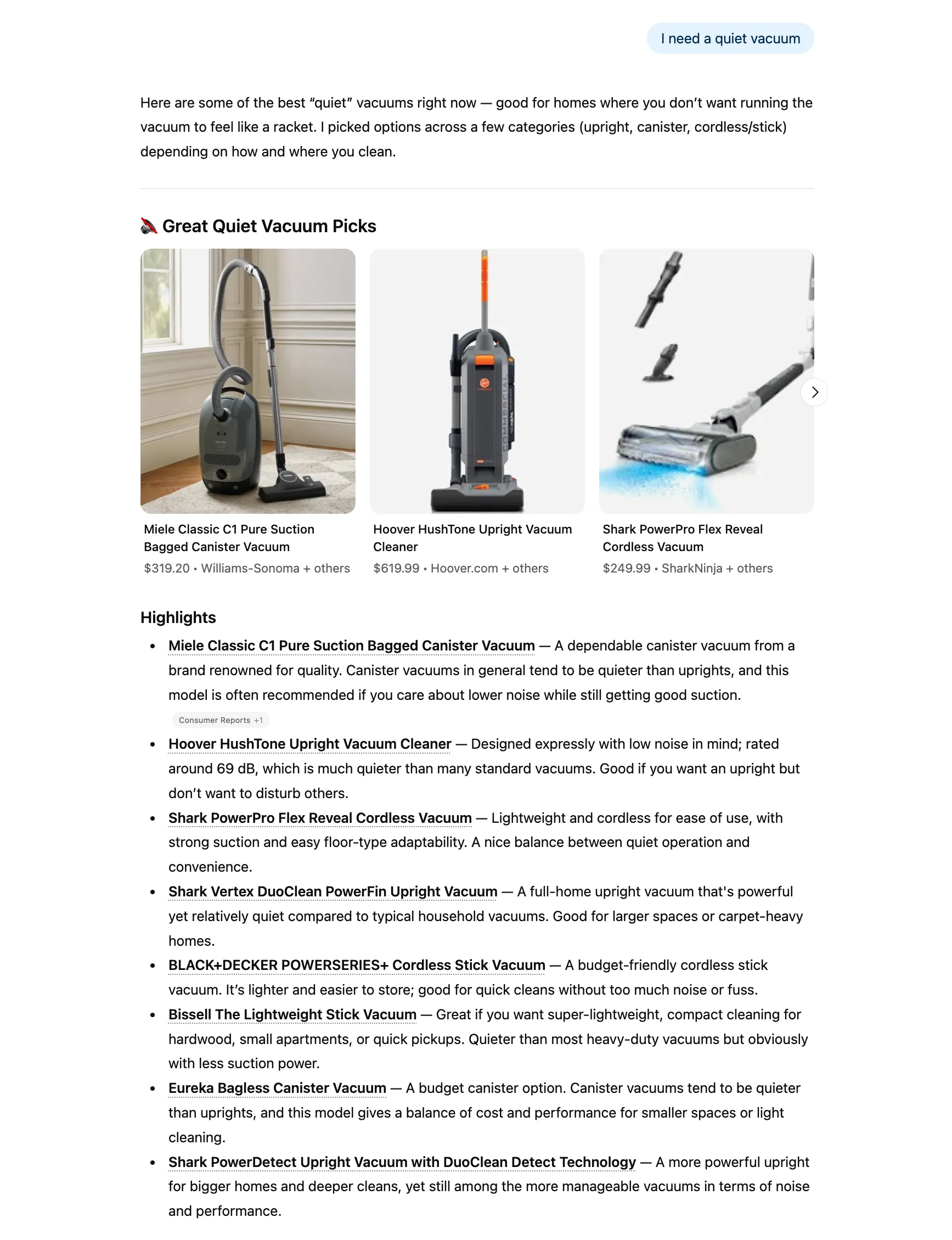
Unlike traditional search or simple feature lookups, this new tool offers multi-step, conversational product discovery, powered by deeper data and more precise reasoning.
What’s new in this advancement:
- Conversational refinement: ChatGPT asks smart, clarifying questions to narrow down preferences, something traditional search can’t replicate.
- Real-time comparison logic: The system evaluates specs, reviews, pricing, and availability from high-quality sources.
- Adaptive research flow: Users can mark items as “Not interested” or “More like this,” training the results in real time.
- Personalization through memory: If memory is enabled, ChatGPT incorporates past product interests to guide recommendations.
- Category depth: The new model performs exceptionally well in complex niches like electronics, home appliances, and sporting goods.
This is not just another search feature—it's a structured research assistant built for the way people actually shop.
How Shopping Research Helps Today’s Buyers
Shopping research solves a long-standing problem: information overload. According to the Pew Research Center, a growing percentage of adults use AI tools to understand complex topics, including consumer decisions. Additionally, a 2025 consumer survey from Stanford AI Index show at least 30% of U.S. shoppers use generative AI for product research and comparison before purchasing.
Key benefits for consumers:
- Faster decision-making
- More accurate comparisons across specs, reviews, and price
- Confidence in product fit thanks to personalized filtering
- A consistent research process regardless of category complexity
- Convenience—no more flipping between retailers, blog posts, or review sites
This is especially impactful for purchase categories that require nuance, such as laptops, strollers, appliances, and outdoor equipment.
How Do I Get My Business To Show in ChatGPT?
Because users can now complete sophisticated research without leaving ChatGPT, brands need to think differently about how their product information is structured and presented online. Visibility now depends not only on ranking in search engines, but also on appearing in AI-generated research summaries.
To stay competitive, brands should focus on:
- Structuring product data for AI retrieval
- Because Shopping Research compares specs, pricing, reviews, and availability in real time, incomplete or inconsistent data can prevent products from being included. Reviewing optimization tactics can help strengthen how AI reads and ranks product information.
- Creating content that mirrors real user questions
- Shopping Research begins with conversational prompts and clarifying questions, so content should reflect the way shoppers actually describe their needs. Tools like AnswerBase help identify question-based patterns that align with how ChatGPT gathers context and determines product fit.
- Ensuring consistency across product descriptions
- ChatGPT synthesizes information from multiple sources, so mismatched or outdated descriptions can affect how products appear—or whether they appear at all. Accuracy in specs and features is especially important for categories like electronics, appliances, and sporting goods.
- Monitoring AI referral behavior
- With Google Analytics 4 and Semrush now surfacing ChatGPT-sourced traffic, brands can better understand how AI-generated research influences conversions and user paths from research to retailer sites.
Together, these steps strengthen visibility within AI-driven product discovery and improve the likelihood of appearing in ChatGPT’s personalized, comparison-focused buyer guides.
How This Update Builds on Prior Advancements in AI Shopping
Instant checkout simplified the end of the buying process. Shopping research now strengthens the beginning. Together, these updates create a cohesive shopping ecosystem inside ChatGPT that can carry a user from initial curiosity to final purchase—without ever leaving the conversation. For merchants on platforms like Shopify and Etsy, this creates even greater incentive to maintain accurate product data and optimized storefronts that integrate cleanly with AI-driven research and purchase flows.
Prepare for the Future of AI Shopping with Red Shark Digital
Navigating these shifts requires a thoughtful approach to AI-driven SEO, structured data, and content built for conversational search. As tools like shopping research continue to evolve, businesses that adapt early will be better positioned to appear in high-value AI recommendations. To strengthen your visibility across emerging AI search platforms, contact Red Shark Digital and start building a strategy for the future.
One Focus:
Keeping You Up To Date.
Digital marketing news delivered to your inbox without the fluff...Maybe a little fluff....The cute kind 🐶!